Sores on the feet are a major complication of diabetes mellitus. Recovery is longer when blood flow is poor, when there is infection, or when immunity is decreased, increasing the risk for tissue death and leg amputation. Routine therapy involves control of sugar levels, removal of dead tissue, the use of antimicrobials, physical de-stress, and adequate wound cover. In the past 10 years, other light therapies such as low-intensity lasers have been supported as a means of healing these difficult-to-heal ulcers.
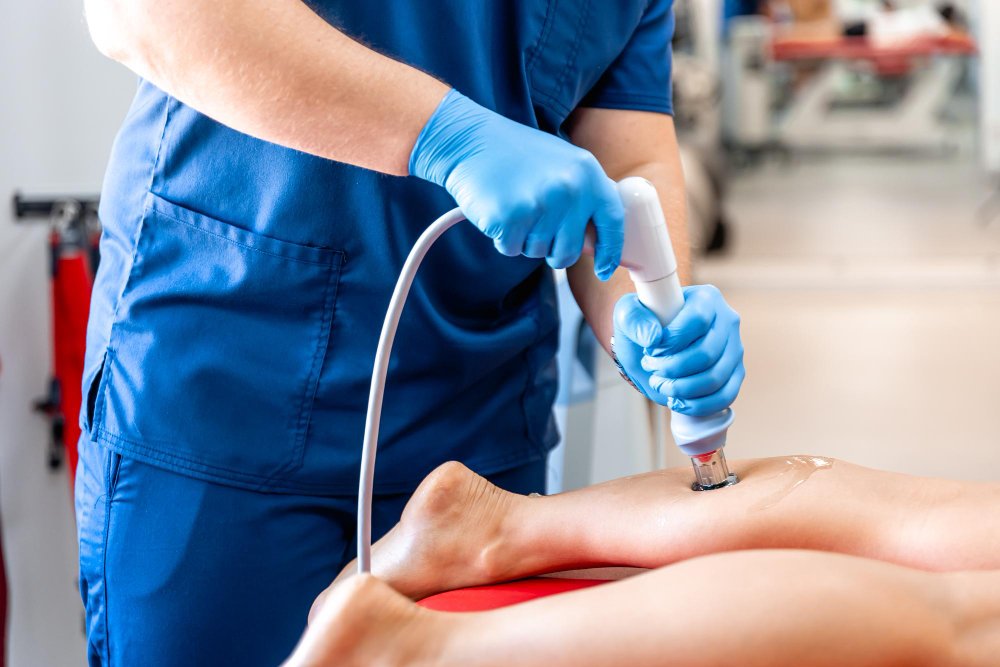
Laser treatment involves delivering low-powered, monochromatic light to stimulate the body’s own healing mechanisms, thereby promoting healing in affected areas. The difference is that high-powered versions cut and ablate tissue, while this method uses low-energy photons, which penetrate the layers of the body without causing any thermal damage. Typically, medical practitioners prefer the red wavelengths (around 632.8 nanometers); sometimes, they choose light that is slightly redder (685). Sunlight at these wavelengths penetrates deeper into the skin and damages slow-healing sores associated with diabetes.
Good results in terms of the healing of diabetic foot ulcers have been seen with laser therapy. Wounds healed faster and healing time was shorter with laser intervention. Lasers, when used as an adjunct to standard physiotherapy, were more effective than standard treatment alone. The decrease in microbial counts was evident in those groups that were treated with laser therapy. When physiotherapy rehabilitation was added with laser therapy, infections were less frequent, indicating positive effects.
Laser treatment has been found to improve wound healing in most cases as it directly affects the cells. Poor oxygen delivery to the cells, due to diabetes, slows down the working of the cells – this reduces the growth of new blood vessels as well as the production of collagen. When the light energy is absorbed by parts within the mitochondria, specifically a molecule called cytochrome c oxidase, additional ATP is produced. Because there is more ATP in cells, they function better; they grow more rapidly, make proteins more efficiently, and aid in the healing process. The faster basic processes are boosted, the sooner healing will occur.
New blood vessel development gets a boost from laser treatment. Diabetic sores are affected by poor blood circulation to the sores, which is caused by damaged blood vessels in the limbs. Lining cells in veins get activated by the laser light, thus allowing more nutrients to reach the damaged areas, along with some important signals such as VEGF. If the small blood circulation is enhanced, then the skin is restored faster. When oxygen is always available under the surface, the healing of tissues will speed up.
A significant one is reducing swelling. Diabetic sores that persist for extended periods of time typically remain at a stage in which they are exposed to an excessive amount of chemical compounds that irritate the area, as well as some harmful molecules. At low intensities, laser therapy treatments reduce these harmful compounds, such as some signaling proteins, and increase the body’s natural defenses from cell damage. There is less stress on the body, and the body is more likely to heal. In addition, light energy can help to relieve fluid build-up and discomfort by aiding waste elimination through vessels and changing the way nerves communicate.
Laser therapy can help to decrease the number of microbes that can be found in wounds. Studies show that lasers are more effective at killing bacteria in an ulcer. As there will be fewer bacteria in the environment, the risk of infection decreases drastically. It’s important because infections can slow your recovery or cause loss of the limb in people with diabetes.
Healing occurs in phases with laser therapy. Immediately following injury, light slows swelling and reduces immune cell recruitment to the injury site. Structural proteins start to form as rebuilding begins with the deposition of collagen by fibroblasts and the formation of supporting scaffolds. Blood vessels develop concurrently to aid circulation where it is most required. Then other fiber networks are realigned to make them more durable, pulling edges together. As time goes on, better skin develops, and sores heal quicker for diabetics.
In therapy, the energy level and its use are crucial. This is the case for several different experiments: too little power can mean no benefit, and too much can mean slower recovery. Rather than using the word “and”, use the words “then” and “then”: low doses have no effect; high doses have harmful effects; somewhere in between is improvement. There are indications that wounds associated with diabetes would occur best at a sweet point between 3 to 6 joules per square centimeter. Light in the red range (632.8 to 685 nanometres) is often selected most, and intensities around fifty milliwatts per cm². Light is delivered at each site on and around the sore for half a minute to almost a minute during each session.
Therapy duration varies depending on the depth of the sore, its extent, the presence of infection and blood sugar control. The pattern was three weekly sessions, typically over a month’s time, as was observed in many studies that employed light therapy. Repair is apparent after 2-4 weeks, but may be much longer for older wounds. Light beam sessions are generally not painful, do not open up the skin, and occur outside of hospital walls most of the time. The special glasses are worn over the eyes to ensure they are protected from any possible harm caused by the beams. It’s best used with other healing practices, not in place of them. If blood sugar control is not handled appropriately, the results of treating infections, relieving pressure, and maintaining proper tissue are sub-optimal.
One of the emerging treatment modalities for diabetic ulcers is laser therapy. It stimulates the mitochondria, leading to increased production of ATP to aid in tissue repair. Regular light exposure increases the rate of healing as new blood vessels grow, swelling decreases, and collagen is deposited more rapidly. Under certain red-light conditions, wounds are visibly contracted. They are typically done several times a week, with light at a frequency between 632.8 and 685 nanometers and a fluence of 3-6 joules per square centimeter. Many times, progress is seen over the course of weeks. Laser therapy is value-added, non-harmful, and can be used in conjunction with the normal treatment.